Weather's Subtle Hand in Reshaping Wagering Values for Field-Based and Track Events
Written by Carlo Neumann · Sep 24, 2026

Weather's Subtle Hand in Reshaping Wagering Values for Field-Based and Track Events
Weather conditions exert measurable influence over performance metrics in outdoor competitions, and betting markets adjust odds accordingly when forecasts shift. Track events such as sprints, hurdles, and distance races respond to variables including wind speed, temperature, and precipitation, while field-based disciplines like long jump, shot put, and javelin throws show parallel sensitivities to surface moisture and air density. Data from meteorological services and athletic governing bodies indicate that these factors alter expected outcomes enough to move wagering lines by several percentage points in major meets.
Track Event Adjustments Under Variable Conditions
Wind assistance rules cap legal tailwinds at 2.0 meters per second for record eligibility, yet betting platforms still price performances when gusts exceed that threshold because athletes gain measurable speed advantages. Researchers at the University of Colorado documented that a consistent 1.5 m/s tailwind can reduce 100-meter times by 0.05 to 0.10 seconds on average, prompting oddsmakers to shorten favorites in sprint markets during windy sessions. Temperature also plays a documented role: studies compiled by the National Oceanic and Atmospheric Administration show that muscle elasticity declines below 15°C, lengthening reaction times and elevating underdog payouts in middle-distance races.
Rainfall changes track surface friction and increases injury risk, data from the World Athletics technical reports confirm. When precipitation exceeds 5 millimeters in the hour before an event, bookmakers widen spreads on field event totals and lower implied probabilities for personal-best performances. In September 2026, several European championship meets scheduled on synthetic tracks are expected to encounter early-autumn showers, and historical patterns suggest those conditions will push live odds on combined events higher as decathletes and heptathletes face wet approach runs.
Field-Based Sports and Surface Interactions
Field events depend on run-up consistency and landing area stability, both of which weather directly modifies. High humidity raises air density and shortens javelin flight distances, while crosswinds displace implement trajectories by up to 2 meters according to biomechanical models published in the Journal of Sports Sciences. Bookmakers incorporate these variables into player-prop markets; when wind forecasts reach 25 km/h, lines on throw distances move outward and accumulator payouts adjust to reflect reduced favorite probabilities.
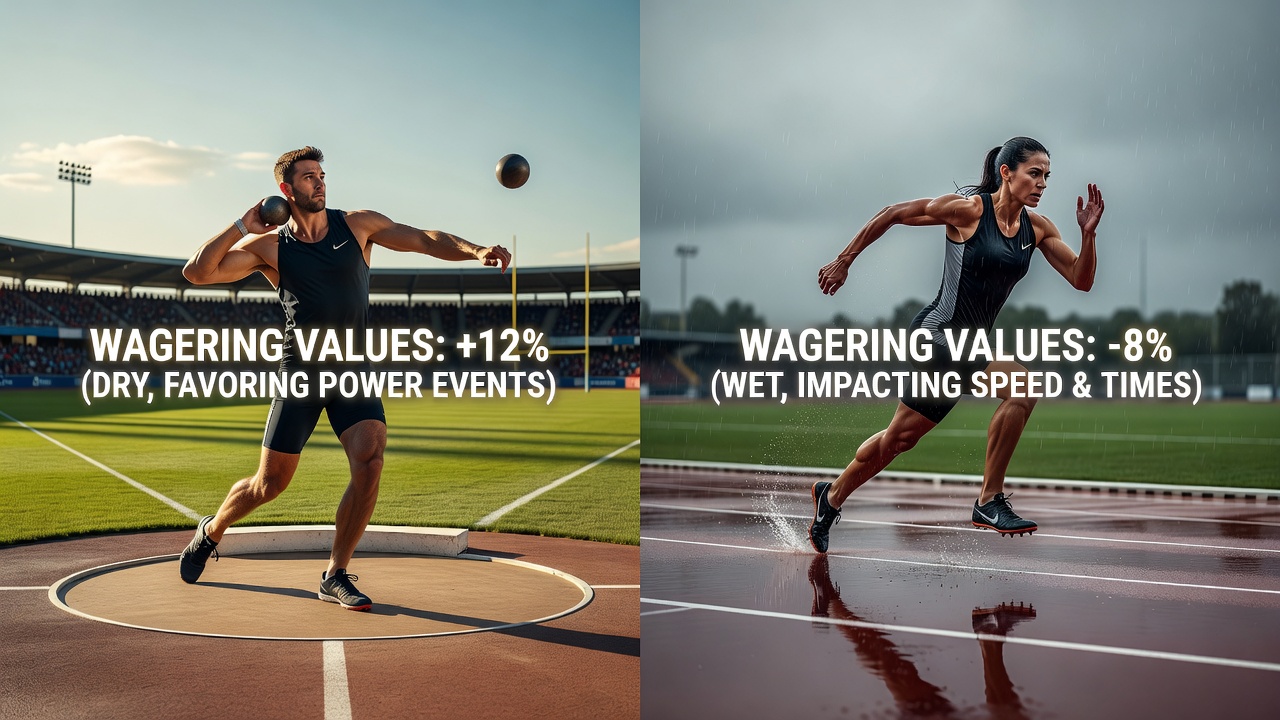
Ground softness from overnight rain affects takeoff boards in jumping events and alters grip for pole vaulters. Data collected by the Australian Bureau of Meteorology during the 2024–2025 domestic season revealed that wet runways correlated with a 12 percent increase in no-jump disqualifications, a statistic that oddsmakers now reference when setting early lines for Oceania championships. Observers note that temperature swings of more than 8°C between morning qualifying rounds and evening finals also shift hydration strategies and recovery windows, factors reflected in live betting adjustments for multi-round competitions.
Market Responses and Data Integration
Betting operators integrate real-time weather feeds into pricing algorithms, and those feeds produce rapid line movements once official forecasts update. A 2025 report from the Canadian Centre for Ethics in Sport examined how wind and temperature data altered closing odds across 180 track-and-field sessions; the analysis found average line shifts of 4.2 percent in sprint and jump markets when conditions deviated more than 10 percent from seasonal norms. Those who monitor multiple weather sources simultaneously gain access to edges that appear once forecasts stabilize within four hours of competition start.
Cross-border regulatory frameworks require transparency around data sources used for odds compilation. European operators reference the European Centre for Medium-Range Weather Forecasts, whereas North American platforms often cite National Weather Service grids. Both sets of information feed into models that recalculate probabilities for event totals and head-to-head matchups whenever precipitation probability crosses 40 percent or sustained wind exceeds 20 km/h. Such recalibrations occur without human intervention in most automated systems, ensuring consistency across pre-event and in-play offerings.
Conclusion
Weather data have become integral inputs for wagering valuation in track and field disciplines because they produce quantifiable performance deviations that markets price accordingly. As forecasting resolution improves and real-time sensors proliferate at competition venues, oddsmakers continue to refine algorithms that translate atmospheric variables into adjusted probabilities for field-based and track events alike.