Weather Patterns Reshaping Cross-Sport Parlay Dynamics During Outdoor Events
Written by Otto Hoffmann · Aug 19, 2026
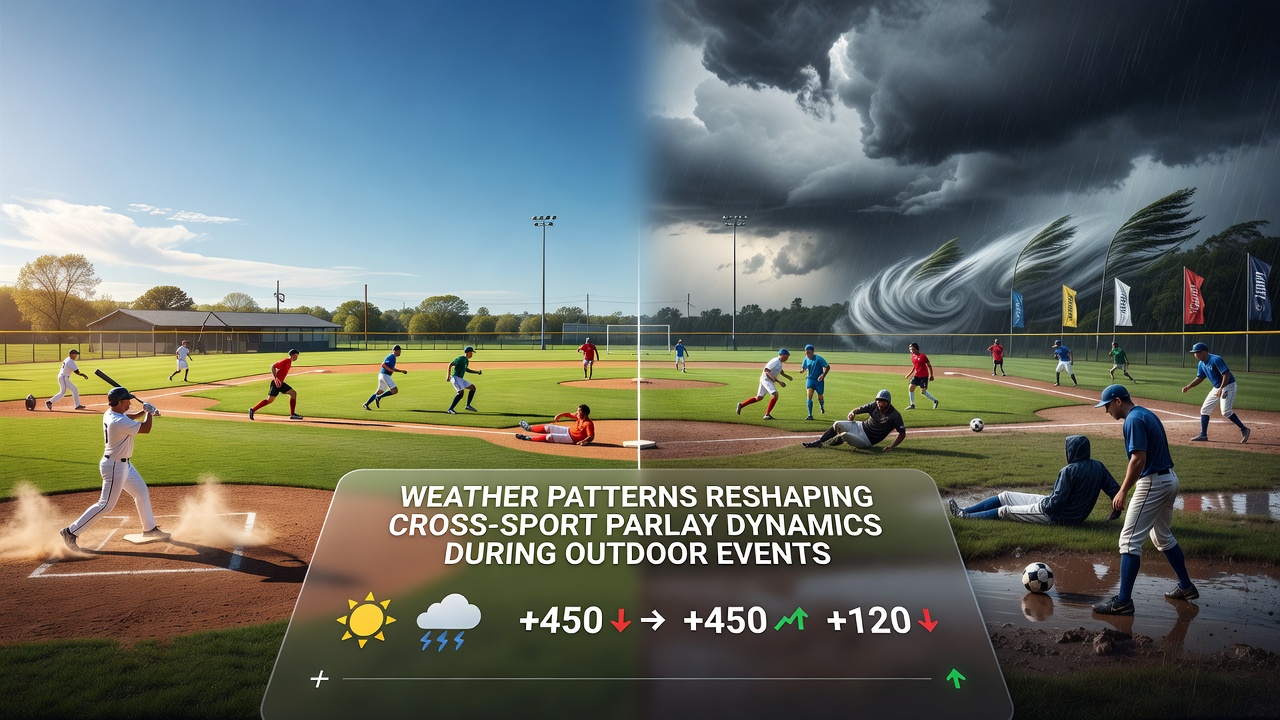
Weather Patterns Reshaping Cross-Sport Parlay Dynamics During Outdoor Events
Weather conditions have long influenced individual outdoor sports, yet recent patterns show how these same variables now alter the structure of multi-sport parlays that combine events across football, golf, tennis, cricket and horse racing; analysts track shifts in wind speed, precipitation and temperature because each factor modifies playing surfaces, player performance metrics and live odds in real time. Data from major tournaments held in 2025 and early 2026 illustrate consistent correlations between atmospheric changes and adjusted betting lines, particularly when bettors construct accumulators that span several disciplines on the same day.
Atmospheric Variables and Surface Conditions
Precipitation alters grass and clay courts differently than it changes turf pitches or fairways, which forces oddsmakers to recalculate probabilities mid-event and creates ripple effects when those recalculations feed into combined wagers. Wind gusts above 25 kilometres per hour, for instance, reduce serve percentages in tennis while simultaneously lengthening approach shots on exposed golf holes; observers note that platforms offering cross-sport accumulators adjust both markets within the same betting window, tightening or widening spreads to reflect the shared environmental pressure. Temperature swings also matter because higher heat accelerates ball speed on hard courts yet increases fatigue in endurance events such as marathon stages in cycling or long rounds in golf, and those divergent outcomes appear together in parlays that link morning tennis matches with afternoon golf rounds.
Live Odds Adjustments Across Disciplines
Bookmakers update totals and handicaps continuously once weather forecasts shift, and the frequency of those updates has risen since automated systems began ingesting real-time meteorological feeds. In August 2026, several major outdoor tournaments overlapped in the northern hemisphere summer schedule, producing documented instances where sudden afternoon thunderstorms suspended play in one sport while another continued under different regional conditions; the resulting divergence in completion rates prompted immediate repricing of multi-leg bets that had paired suspended matches with ongoing fixtures. Researchers tracking these repricings report that parlay payout structures became more sensitive to venue-specific forecasts because a single delay or abandonment could nullify entire accumulator legs without triggering the same outcome in parallel events held elsewhere.

Regional Forecast Integration in Betting Models
Operators now incorporate ensemble weather models that cover multiple continents because cross-sport parlays often draw legs from events scheduled in different time zones and climates. The Australian Bureau of Meteorology supplies detailed precipitation probability grids that betting syndicates combine with National Weather Service outputs from the United States when constructing same-day accumulators spanning cricket in Melbourne and baseball in Chicago; this layered forecasting reduces uncertainty around rain delays that historically produced high variance in settlement times. European meteorological agencies likewise publish wind-vector data used by platforms that accept football and tennis legs within one ticket, allowing risk managers to hedge exposure when forecasts indicate frontal systems moving across both the United Kingdom and the Iberian Peninsula on the same afternoon.
Case Examples from Recent Seasons
One documented sequence occurred during a July 2025 weekend when strong westerly winds affected both a golf major in Scotland and a tennis tournament in London; models that combined hole-by-hole scoring averages with set-win probabilities showed measurable movement in combined odds once wind speeds exceeded operational thresholds. Another instance unfolded in March 2026 when unseasonal rain in the southern hemisphere disrupted cricket matches in South Africa while horse racing continued uninterrupted in Australia; accumulators that paired century probabilities with race win markets required rapid recalibration because abandonment rules differed between the two codes, and the disparity altered the overall implied probability of the ticket. These episodes demonstrate how weather no longer functions as an isolated variable but as a shared input across otherwise unrelated outdoor disciplines.
Regulatory and Industry Data Sources
Industry reports compiled by the European Gaming and Betting Association track the proportion of weather-related line movements in multi-sport products, while academic studies from Canadian universities examine correlations between atmospheric indices and settlement outcomes in international betting pools. Figures released by these organisations indicate that the volume of live adjustments triggered by forecast revisions has increased by double-digit percentages year over year, particularly for tickets that span at least three distinct outdoor codes. Such data sets allow operators to refine their risk parameters without relying on single-sport historical averages that ignore simultaneous environmental pressures.
Conclusion
Weather patterns continue to reshape the mechanics of cross-sport parlays by introducing simultaneous variables that affect multiple events on overlapping schedules. Operators respond with integrated forecasting tools and dynamic repricing protocols that reflect the interconnected nature of outdoor competitions, and available records from 2025 through August 2026 confirm measurable shifts in accumulator structures whenever atmospheric conditions diverge across venues. The ongoing refinement of these models rests on continued access to granular meteorological inputs and consistent regulatory reporting from diverse regional sources.