Weather-Driven Line Movements: Linking Set-Piece Outcomes and Track Conditions in Layered Multi-Sport Wagers
Written by Carlo Neumann · Aug 7, 2026
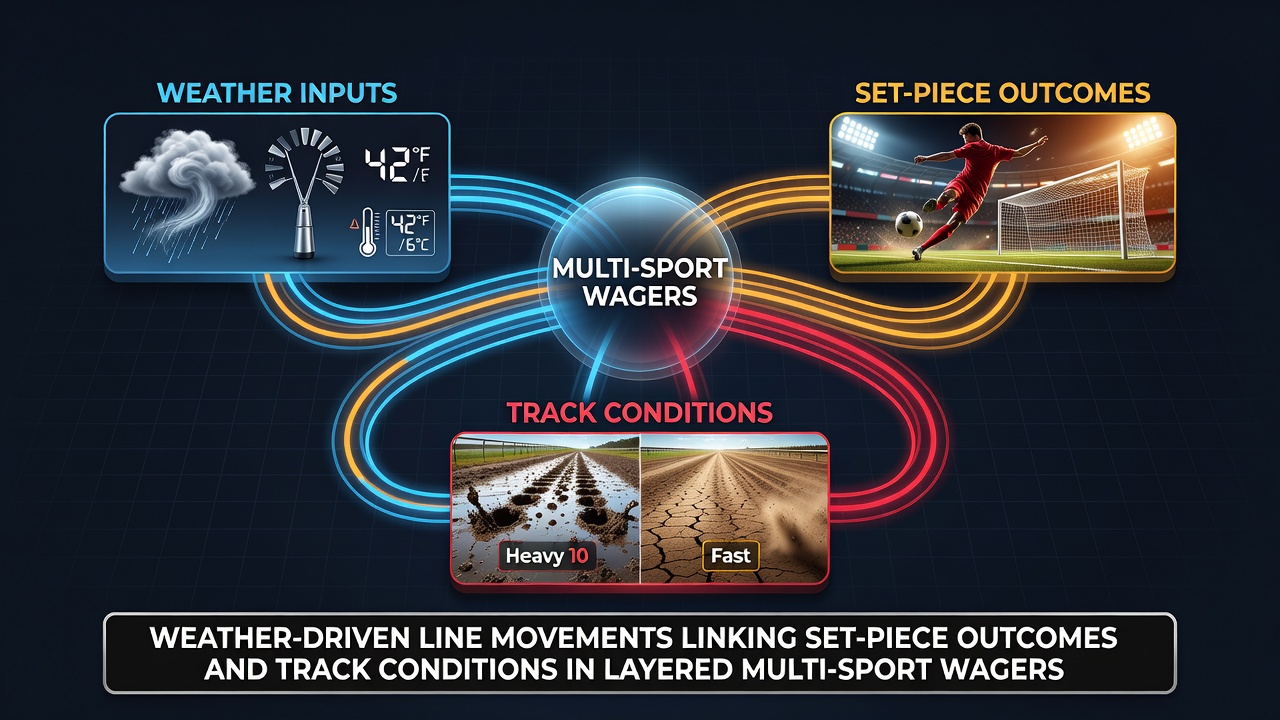
Weather-Driven Line Movements: Linking Set-Piece Outcomes and Track Conditions in Layered Multi-Sport Wagers
Weather patterns exert measurable influence on betting lines across football set-piece markets and horse racing track surfaces, creating connections that appear in layered multi-sport accumulators. Data from meteorological agencies shows that precipitation, wind speed, and temperature shifts alter probabilities in corner counts, free-kick conversions, and turf firmness ratings, prompting oddsmakers to adjust prices before events begin.
Atmospheric Effects on Football Set-Piece Metrics
Football set-piece outcomes respond directly to wind velocity and rainfall intensity, with researchers documenting higher corner frequencies when crosswinds exceed 15 kilometers per hour. Studies compiled by the National Oceanic and Atmospheric Administration indicate that matches played in moderate rain produce elevated totals in set-piece markets because ball movement becomes less predictable and defensive lines adjust positioning. Line movements in these markets often precede kickoff by several hours as weather forecasts update, allowing bettors to observe correlations between forecast revisions and adjusted odds on corner handicaps or total set-piece counts.
Wind direction matters as much as speed, since tailwinds favor longer throws and headed clearances that generate additional set pieces, whereas headwinds compress attacking options and reduce corner volume. Observers note that teams with strong set-piece specialists see their implied probabilities shift when gust forecasts change overnight, and these adjustments propagate into accumulator constructions that combine football results with other sports.
Track Surface Responses in Horse Racing
Horse racing markets react to track conditions through official going reports that classify surfaces from firm to heavy based on moisture content. Heavy rain softens ground, lengthening winning times and favoring stamina-oriented runners while compressing odds on speed horses. Data collected at major meets demonstrates that track bias shifts produce rapid line movements in win and place markets, with morning forecasts triggering afternoon adjustments that mirror patterns observed in football set-piece lines.
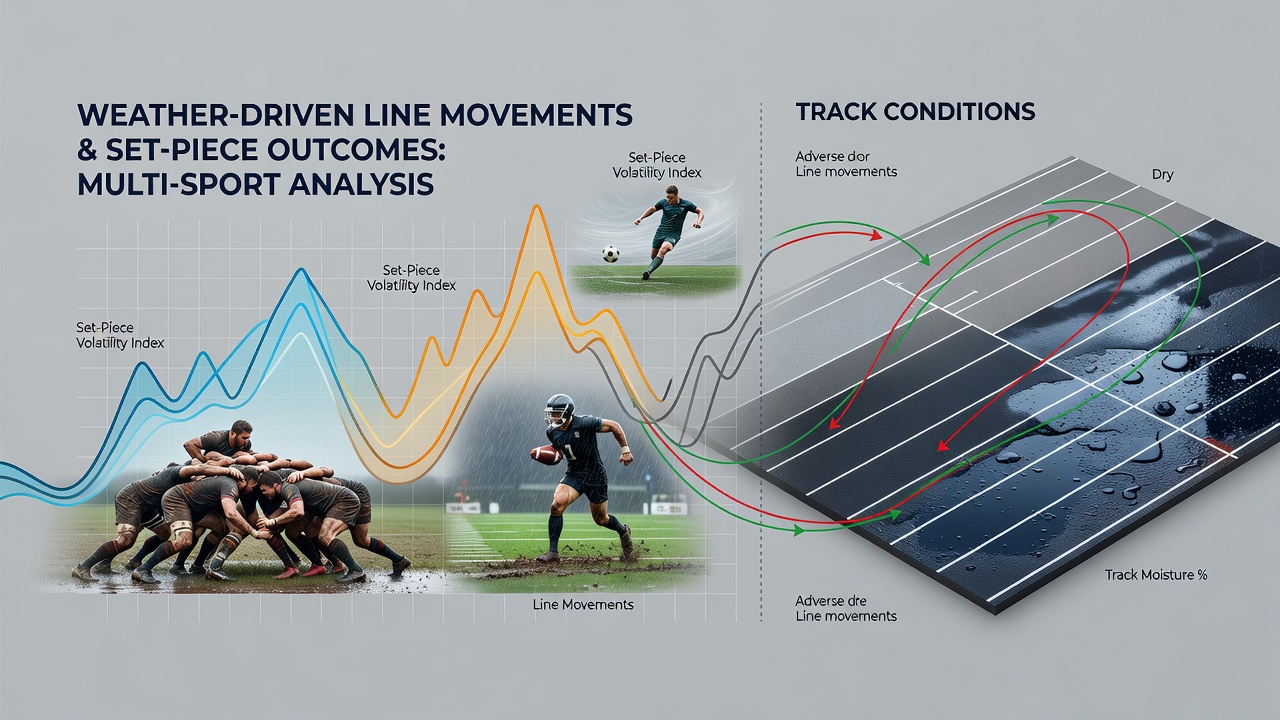
Temperature swings also influence track maintenance decisions, because warmer conditions accelerate drying and alter rail positions that affect draw biases. Those who monitor multiple venues report that simultaneous weather events at distant racecourses and football stadiums generate synchronized line movements across unrelated events, creating opportunities within layered wagers that combine selections from both disciplines.
Cross-Sport Accumulator Construction
Layered multi-sport wagers link football set-piece outcomes with horse racing track conditions when weather systems span regions hosting concurrent fixtures. In August 2026, European pre-season tournaments and North American summer racing meets coincided with widespread Atlantic weather patterns that produced correlated adjustments in corner totals and turf speed figures. Accumulator builders incorporate these links by monitoring unified forecast models that cover both pitch and track environments, then placing legs on markets whose lines move in parallel.
Software platforms aggregate real-time weather feeds with historical performance data to highlight pairings where set-piece over lines and heavy-ground favorites exhibit joint probability increases. Such pairings appear because both outcomes stem from the same precipitation event rather than independent variables, reducing the effective variance within the accumulator structure.
Line Movement Patterns and Data Integration
Betting exchanges record line movements that accelerate when updated weather bulletins arrive within two hours of event start times. Football corner markets shift by 0.25 to 0.5 goals following wind advisories, while horse racing place odds compress or expand according to revised going descriptions issued by clerks of the course. Researchers at institutions studying sports analytics have mapped these movements against forecast accuracy scores, revealing that higher-confidence weather predictions produce larger and more sustained line adjustments across both sports.
Operators integrate satellite imagery and ground sensors to refine forecasts, and these refinements feed directly into pricing engines. The resulting data streams allow accumulator models to weight weather-sensitive legs differently from neutral selections, adjusting stake distribution when multiple events share similar atmospheric influences.
Conclusion
Weather-driven line movements create measurable linkages between football set-piece markets and horse racing track conditions within layered multi-sport wagers. Observers continue to track how forecast updates translate into synchronized odds shifts, with data from sources such as the Australian Bureau of Meteorology providing additional regional context for global weather impacts on betting lines. These patterns remain visible in accumulator construction whenever overlapping fixtures encounter shared atmospheric conditions.