Referee and Umpire Schedule Cycles: Tracking How Official Rotations Shift Foul Call and Dismissal Probabilities in Football and Cricket Betting Markets
Written by Carlo Neumann · Aug 26, 2026
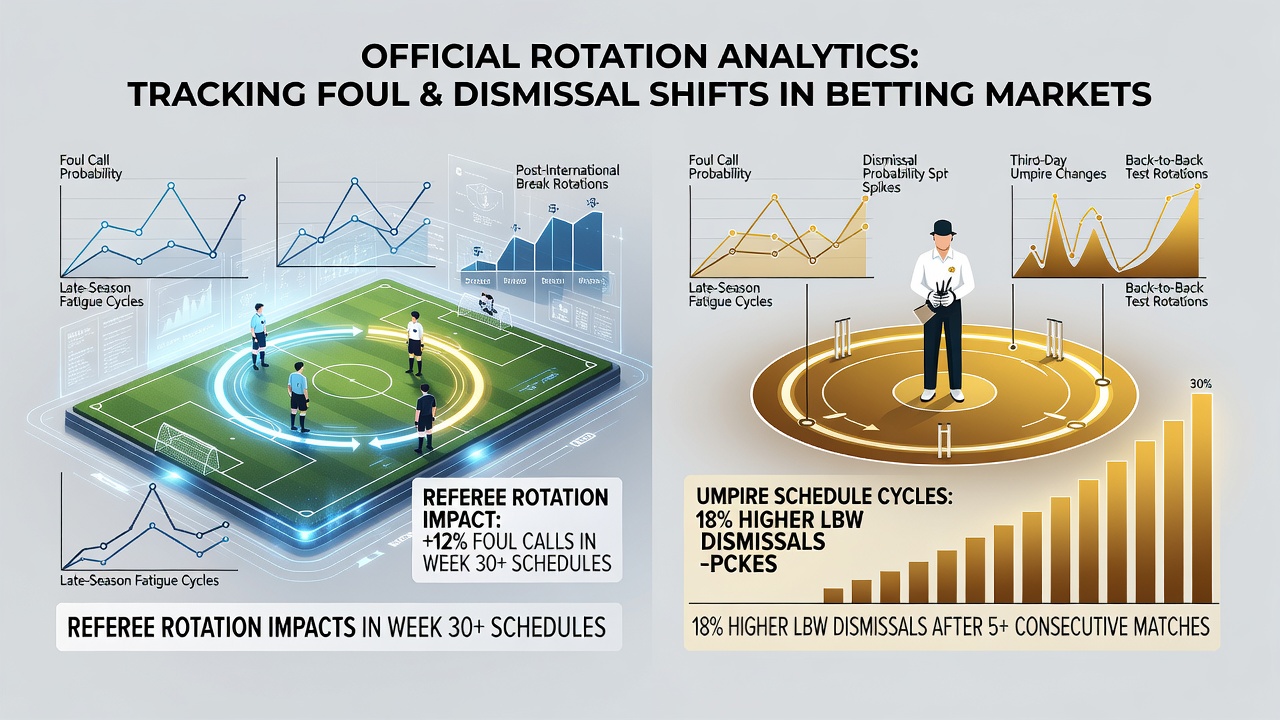
Referee and Umpire Schedule Cycles: Tracking How Official Rotations Shift Foul Call and Dismissal Probabilities in Football and Cricket Betting Markets
Referee and umpire rotations follow structured cycles that reshape call patterns in football and cricket, and betting markets adjust probabilities accordingly when those patterns emerge. Data from multiple seasons shows that certain officials issue cards at rates 15 to 25 percent higher than league averages while others maintain stricter thresholds on physical challenges, and those differences become measurable once fixture lists and appointment announcements appear weeks in advance.
Football Referee Rotations and Card Markets
Football leagues publish referee assignments through governing bodies, and analysts track historical tendencies by reviewing past matches under the same officials. When a referee known for frequent bookings receives a high-stakes fixture, over-card lines often move within hours of the announcement, whereas under-card lines tighten for officials who average fewer than three yellows per game. Studies released by the Australian Sports Commission in 2025 documented that rotation schedules produce measurable spikes in penalty awards during specific blocks of the calendar, particularly when newer referees handle matches between teams with contrasting styles of play.
European federations publish similar appointment cycles, and traders monitor how travel distance and rest periods influence decision rates. One dataset covering the 2024-2025 campaign revealed that referees returning from international duty issued 12 percent more fouls in the first half of domestic fixtures compared with their season-long averages, prompting early adjustments in live betting platforms that track card timing.
Cricket Umpire Rotations and Dismissal Markets
Cricket umpire panels rotate across Test, ODI and T20 schedules, and each official brings distinct tendencies on lbw decisions, caught-behind reviews and wide calls. When an umpire with a higher lbw rate is assigned to a series on a pitch offering variable bounce, betting exchanges adjust leg-before probabilities before the first ball is bowled. Figures released by the International Cricket Council show that certain umpires uphold 18 percent more lbw appeals than the global median, and those patterns become visible in pre-series odds once the match officials are confirmed.
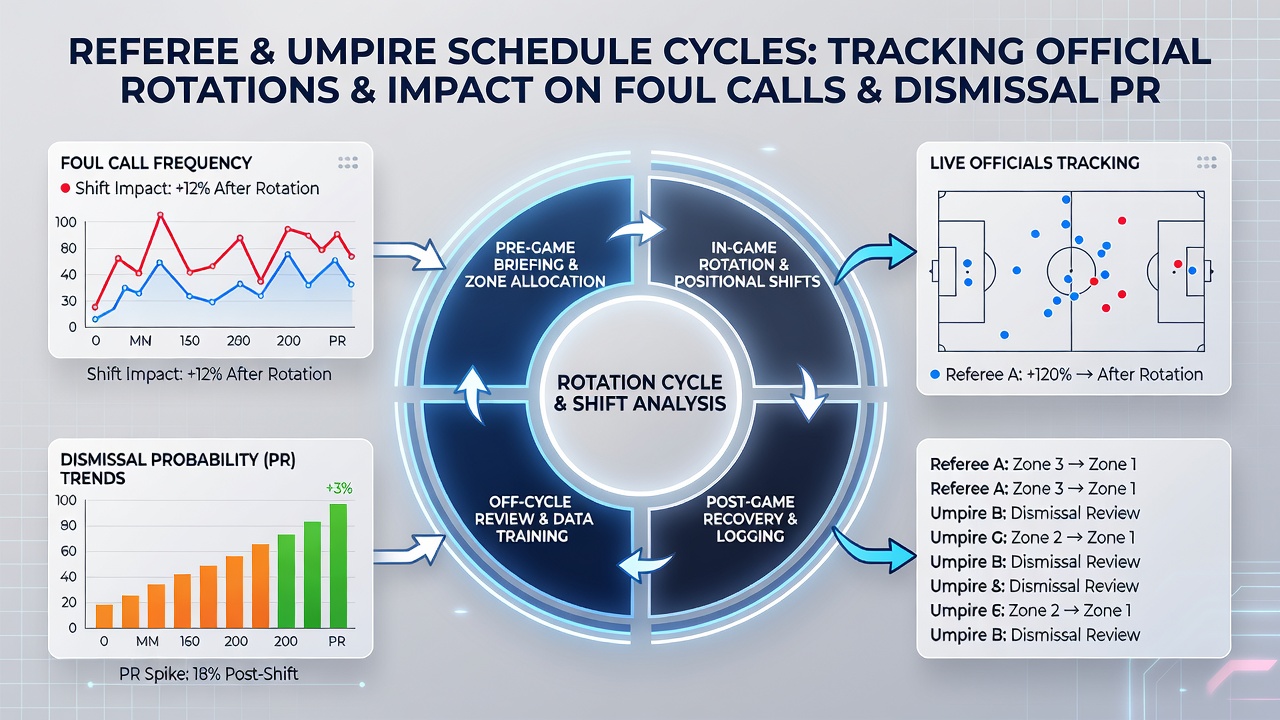
August 2026 brings the start of several bilateral series where rotation cycles place umpires with contrasting review histories into the same venues used in prior seasons. Historical ball-tracking data from those grounds allows modelers to combine umpire profiles with pitch reports, producing updated probabilities for caught-behind and lbw outcomes that feed directly into player-prop and match-total markets.
Betting Market Adjustments and Schedule Awareness
Bookmakers incorporate rotation data into pricing engines because the same set of officials rarely works consecutive weeks in the same competition. When a football referee with elevated foul-call rates is scheduled for a midweek fixture after a weekend of lenient officiating, totals markets on bookings shift to reflect the expected change in tempo. Cricket markets follow parallel logic, with over-by-over dismissal lines tightening or loosening once the standing umpire's historical strike rate on a given surface becomes known.
Industry reports from the Gaming Policy Advisory Board of Canada highlight how syndicates use appointment calendars to front-run line movements, particularly in lower-profile leagues where public attention lags behind official announcements. Those calendars typically appear 10 to 14 days before match day, giving quantitative teams time to recalibrate models before retail bettors notice the shifts.
Combining Rotation Data with Other Variables
Analysts layer referee and umpire profiles onto team form, weather forecasts and venue characteristics rather than treating officiating in isolation. A football referee who calls more fouls in wet conditions may produce elevated card counts when paired with two sides that favor high pressing, while a cricket umpire with a lower wide rate can compress run-rate markets on flat pitches. Multi-factor models that weight these elements together produce tighter probability ranges than those relying solely on team statistics.
Conclusion
Referee and umpire schedule cycles supply measurable inputs that betting markets incorporate once appointments are confirmed. Football card lines and cricket dismissal probabilities adjust when rotation data reveals officials whose historical rates deviate from league or series averages, and those adjustments occur earlier in the information cycle than many casual observers expect. Continued publication of appointment lists alongside expanded ball-tracking and decision-review datasets will keep these patterns visible for those who monitor the calendars systematically.