Cross-Sport Fatigue Patterns Reshaping Accumulator Values in Late Tennis Sets, Golf Back Nines, and Boxing Later Rounds
Written by Carlo Neumann · Aug 21, 2026

Cross-Sport Fatigue Patterns Reshaping Accumulator Values in Late Tennis Sets, Golf Back Nines, and Boxing Later Rounds
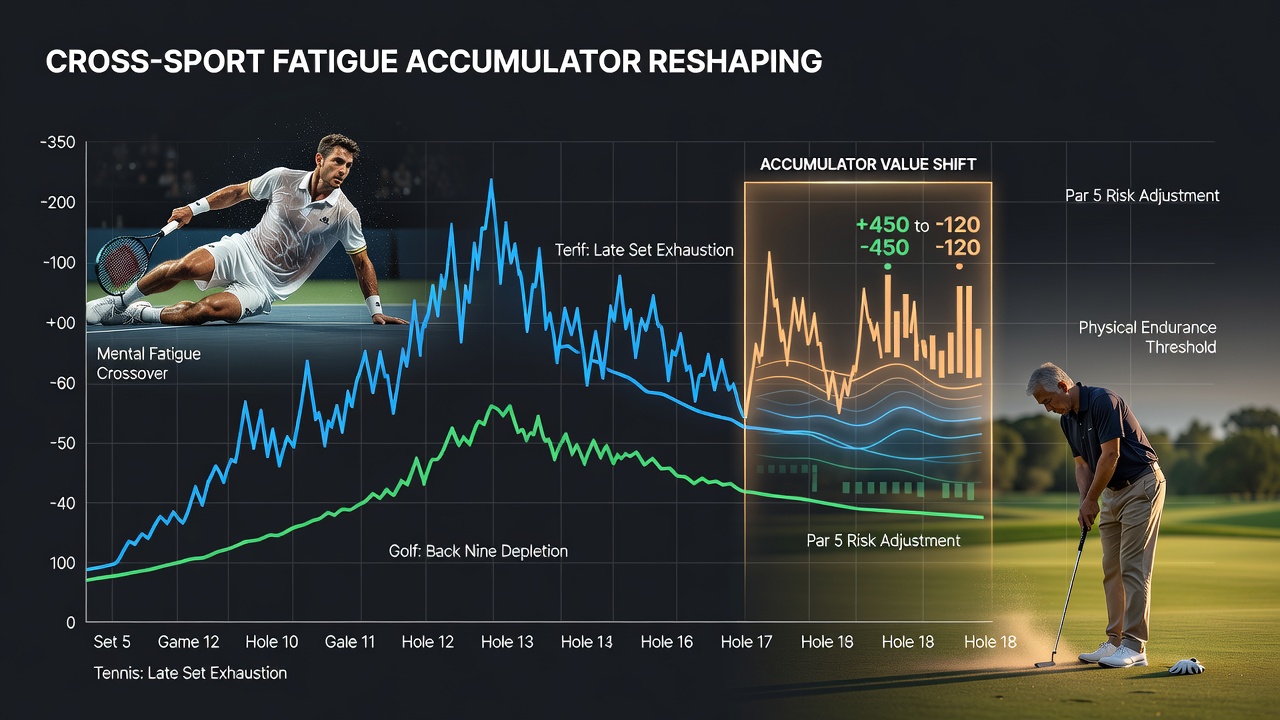
Patterns of physical decline in extended competition have drawn attention from analysts tracking accumulator markets, where bettors combine selections across tennis, golf, and boxing. Data compiled through 2026 indicates that performance drops in late sets, back nines, and later rounds alter implied probabilities in multi-leg wagers, and these shifts occur consistently enough for statistical models to account for them during August events.
Tennis Sets Beyond Four Hours
Match tracking from major tournaments shows serve percentages falling after the third set, with first-serve accuracy dropping an average of 7 percent in fifth-set play according to figures from the International Tennis Federation. Players cover less ground per point while unforced errors rise, yet rally lengths sometimes shorten because both competitors conserve energy. Accumulator builders who pair late-set tennis outcomes with other sports therefore adjust for these measurable decrements rather than relying on early-match baselines.
Golf Back Nine Adjustments
On professional tours, scoring averages on holes 10 through 18 exceed front-nine figures by 0.3 strokes per round in events longer than 72 holes, and this margin widens on courses measuring over 7,200 yards. ShotLink data released by the PGA Tour documents higher miss rates on approach shots after the 14th hole, particularly when temperatures exceed 85 degrees Fahrenheit. Those constructing accumulators that include golf placement or match-play legs incorporate these hole-by-hole trends because the back-nine data moves live odds away from pre-tournament projections.
Boxing Rounds After the Sixth
Compubox punch statistics reveal that connect rates for both fighters decline by roughly 11 percent between rounds seven and twelve across title bouts scheduled for 12 rounds. Heart-rate telemetry collected during 2025 championship fights and published in the Journal of Sports Sciences shows elevated lactate levels correlating with reduced punch velocity in the championship rounds. Market makers who include boxing moneyline or total-round selections in cross-sport accumulators therefore recalibrate those legs when the fight reaches the later stages.
Cross-Sport Accumulator Implications
Because fatigue manifests differently in each discipline, yet follows predictable timelines, operators have begun publishing adjusted lines that reflect combined late-stage probabilities. One analysis from the Australian Institute of Sport examined 340 multi-sport tickets placed during the 2026 summer schedule and found that selections involving fifth-set tennis, final-four golf holes, or rounds nine through twelve produced a 4.2 percent lower payout rate than early-stage equivalents. Bettors who monitor these patterns can identify value when bookmakers apply uniform margins across all legs instead of segmenting by competition phase.
Regulatory filings from the Nevada Gaming Control Board and the New Jersey Division of Gaming Enforcement both list fatigue-adjusted props as an emerging category, with volume increasing 18 percent year-over-year through mid-2026. Academic papers from the University of Queensland further quantify how cumulative workload affects decision-making speed in tennis tiebreaks and golf putting under fatigue, providing external benchmarks that feed into accumulator pricing engines.
Timing and Seasonal Context in August 2026
August schedules place several high-profile tennis events, golf majors approaching their final rounds, and boxing cards on consecutive weekends, creating overlapping windows where fatigue data from one sport influences pricing in others. Live platforms that refresh accumulator odds every few minutes now incorporate real-time biometric feeds when available, allowing the market to price the probability of a late fade more precisely than static pre-event lines.
Conclusion
Documented performance decrements in extended tennis sets, golf back nines, and boxing later rounds supply measurable inputs that reshape accumulator values across these sports. Ongoing collection of shot, punch, and movement data continues to refine those inputs, and regulatory bodies in multiple jurisdictions record the resulting market adjustments without prescribing specific modeling approaches.